Complete Your PGE Energy Audit Guide | Save on Energy Costs
A PG&E energy audit is a professional look at your home or business to see where you're wasting energy. Think of it like a full health check-up for your property's energy habits. The goal is to get a personalized roadmap to lower your bills and make everything run more efficiently.
Demystifying the PG&E Energy Audit
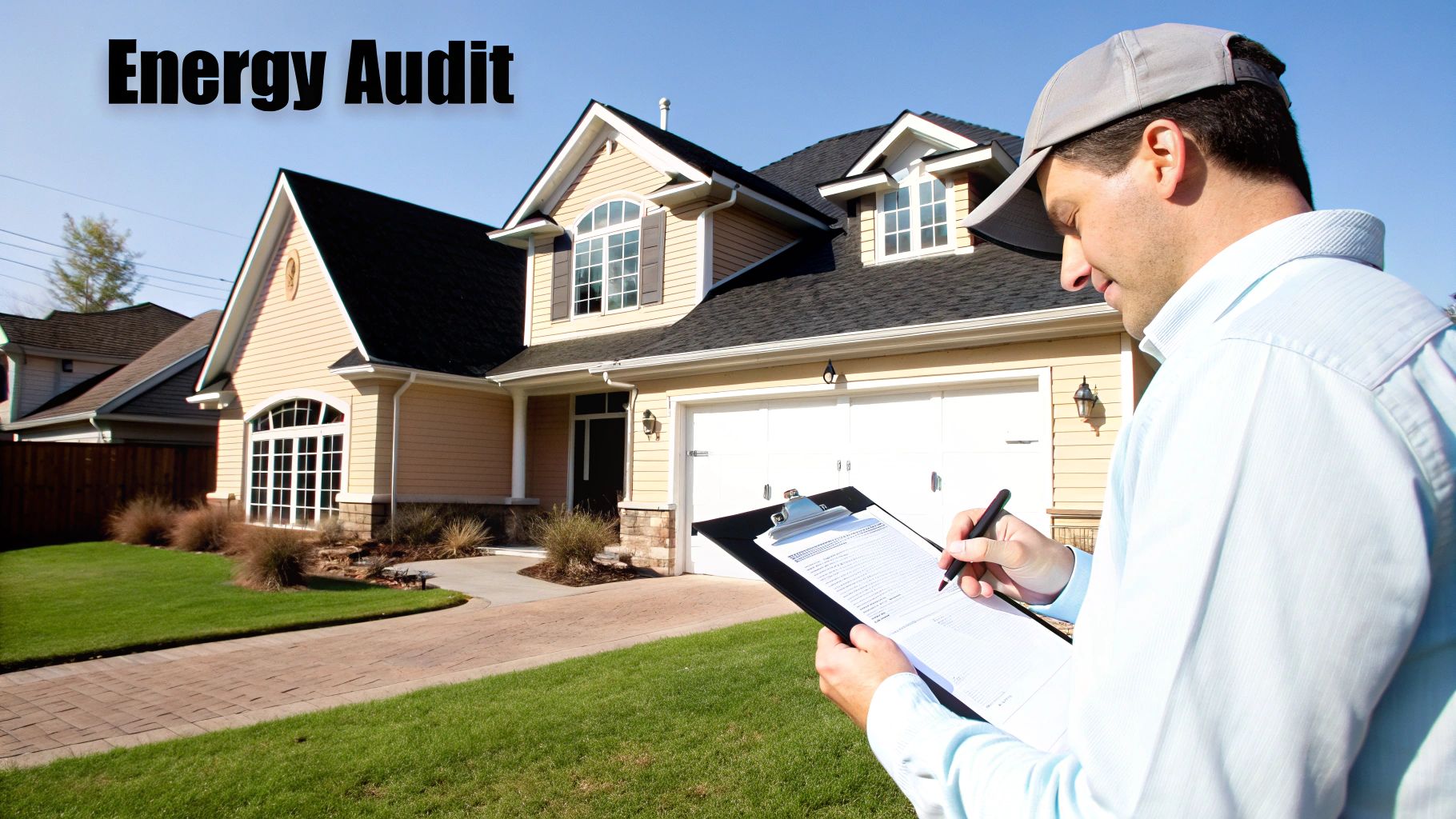
A lot of people think an energy audit is just about finding a drafty window. While that's definitely part of it, a real, professional audit goes much deeper. It’s a methodical process that pinpoints exactly where your energy dollars are going—and more importantly, how to get them back.
This isn't about guesswork. An audit gives you a clear, data-backed plan to cut down on waste. It shows you the specific weak spots, whether that's an old, clunky appliance, outdated lighting, hidden air leaks, or poor insulation. When you see the direct line from the audit's findings to real savings, you can finally make smart decisions.
To give you a quick overview, here’s what the audit is all about in a nutshell.
PG&E Energy Audit At a Glance
| Aspect | Description |
|---|---|
| What It Is | A professional, in-depth evaluation of your property's energy consumption. |
| Main Goal | To identify specific sources of energy waste and inefficiency. |
| Key Areas Covered | HVAC systems, insulation levels, air leakage, appliance efficiency, and lighting. |
| The Outcome | A prioritized action plan showing the most cost-effective upgrades. |
| Why It Matters | It turns confusing energy data into clear steps for saving money and improving comfort. |
Essentially, the audit provides the intelligence you need to stop making random, hopeful upgrades and start targeting the real energy hogs.
From Diagnosis to Dollars Saved
The real power of an audit is that it transforms abstract energy data into a concrete action plan. It's not just about pointing out problems; it’s about showing you the most cost-effective fixes for your specific building.
Think of the final report as a prescription for a healthier, less expensive property. It helps you prioritize upgrades based on what gives you the best return on your investment. For instance, the report might reveal that spending a little on sealing air leaks will pay for itself much faster than splurging on a new water heater.
A PG&E energy audit moves you past the "what if" and gives you a "how-to." It's the critical first step to taking control of your utility bills.
This targeted approach keeps you from wasting money on fixes that won't make a dent in your monthly costs. It’s a core part of PG&E's larger efficiency goals, which by 2020 had already saved an incredible 1,732 net gigawatt-hours (GWh) of electricity—181% of its annual target.
Ultimately, the audit is your foundation for smarter, more sustainable energy use. If you're a PG&E customer, our complete guide to PG&E's services and programs can show you how to take even greater control over your utility data.
How to Qualify and Schedule Your Audit
Getting a PG&E energy audit on the books is surprisingly simple. Forget thinking about it as some long, complicated application process—it’s really just about confirming your spot for a valuable service. The whole point is to get the right help to the right people, whether you're a homeowner or running a business.
The main thing you need is pretty basic: you have to be a current PG&E customer with an active account. This goes for both homes and businesses. After that, the details can change depending on which audit program you're aiming for, since some are built for specific types of properties or customer needs.
Figuring Out if You Qualify
Before you can get anything scheduled, you have to make sure you meet the basic criteria. PG&E has a few different energy assessment tools and programs, and each one has slightly different rules.
For Homeowners:
- You need an active residential PG&E account for the property you want audited.
- It usually has to be a single-family home, duplex, or multifamily building. Some programs might zero in on certain building types.
- A few specialized, no-cost audit programs are income-qualified, designed to help households that fall within certain financial guidelines.
For Business Owners:
- You’ll need an active non-residential (business) PG&E account.
- Your eligibility might depend on your business's size, how much energy you use each year, and what industry you're in.
- PG&E often has specific programs for small businesses, farms, and large commercial buildings, so it’s worth finding the one that fits you best.
Pro tip: Have your PG&E account number ready to go. It’s your main ID for your property and usage history and will make the whole process a lot quicker.
Don't just assume you won't qualify. PG&E wants to boost energy efficiency everywhere, so they make their programs pretty broad on purpose. The smartest move is to check the official PG&E website for the latest eligibility info.
The Step-by-Step Scheduling Process
Once you're pretty sure you qualify, scheduling the audit is a clear, straightforward process. Just follow these steps, and you'll have your assessment booked in no time.
Head to the PG&E Website: Start by going to the "Energy Saving Programs" or "Home Energy Checkup" section on the PG&E site. Think of this as your main hub for all things audit-related.
Pick Your Customer Type: Let them know if you're a residential or business customer. This sends you down the right path to the tools and programs made for you.
Fill Out the Online Form: You'll probably need to log in with your PG&E account info. The form will ask for some basics about your property, like its size, age, and any specific energy headaches you're dealing with. This helps them customize the audit for you.
Choose a Date and Time: The website will show you a calendar of available appointment times. Pick one that works for you, but remember that a proper on-site audit can take a few hours to do right.
Confirm Your Appointment: After you submit everything, you’ll get a confirmation email or message. It will have all the details for your audit, including what you can expect when the expert shows up.
If you grab your account info and property details ahead of time, you can get this all done in just a few minutes. It's a simple step that kicks off your journey to uncovering some serious energy savings.
What Happens During the On-Site Audit
So, you’ve scheduled your audit. What happens when the PG&E energy expert shows up at your door?
Think of them less like a simple inspector and more like an energy detective. Their job is to follow the clues your property leaves behind to figure out exactly where your energy dollars are going. This is a deep dive, not a quick walkthrough. Knowing what they're looking for helps you ask smarter questions and get the most out of their visit.
They’re not just hunting for obvious culprits like old light bulbs. The real value comes from the specialized tools and a methodical process that uncovers the hidden energy drains that silently inflate your bills.
This handy visual sums up the entire journey in three straightforward steps.
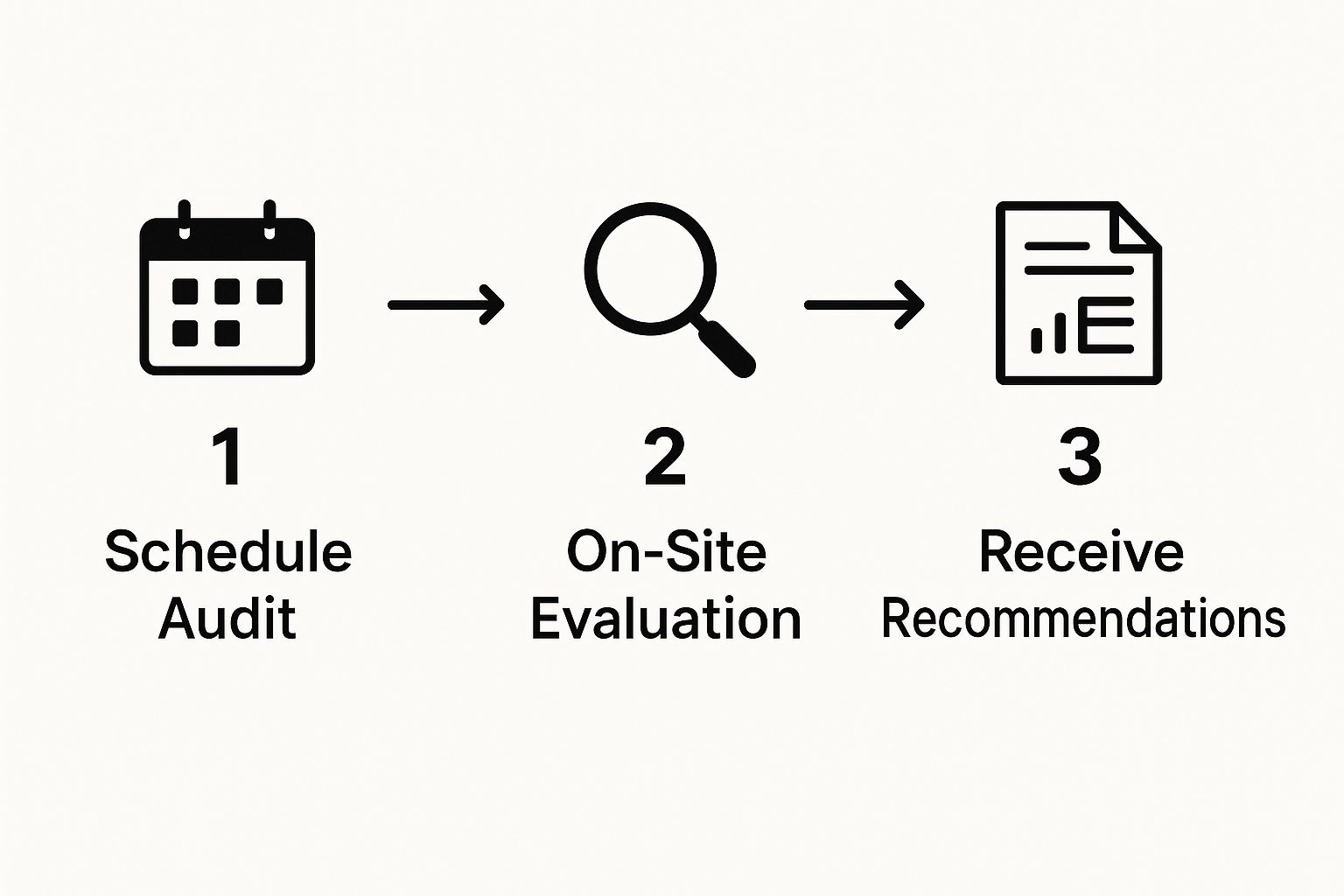
It really is that simple: schedule the visit, have the on-site evaluation, and get your personalized plan. Seeing it laid out like this makes the whole PGE energy audit process feel much less intimidating.
The Exterior and Structural Inspection
Often, the audit begins before the expert even steps inside your home. They'll start with a walk-around of the exterior, examining your home's "building envelope"—the shell that separates your conditioned living space from the outside world.
This first pass is critical. It helps them spot major areas where expensive heated or cooled air might be escaping. They’ll be checking a few key things:
- Windows and Doors: Looking for worn-out seals, old single-pane glass, or gaps around the frames. These are classic spots for heat loss.
- Foundation and Siding: Searching for cracks and gaps where outside air can easily sneak in.
- Roof and Attic Vents: Making sure your attic can breathe properly. Good ventilation is key to managing both heat and moisture.
This outside-in approach gives the auditor a solid baseline understanding of your property's potential weak points before digging into the details inside.
Interior Diagnostics and Equipment Evaluation
Once indoors, the focus shifts to the things that actively use power and the hidden issues that cause them to work overtime. This is where the cool gadgets come out, letting the auditor "see" what's normally invisible.
A big piece of this phase is checking out your major systems and appliances. The auditor will look at the age, condition, and efficiency of your:
- HVAC System: Your furnace, air conditioner, and all the ductwork get a close look. Leaky ducts are a huge energy vampire, often losing 20-30% of the air moving through them before it ever reaches your rooms.
- Water Heater: This is one of the biggest energy hogs in any home. Its efficiency, temperature setting, and insulation are all put under the microscope.
- Lighting and Appliances: The auditor will take inventory of your light bulbs (LED, CFL, incandescent) and check the energy draw of your big appliances like the fridge and washer.
The goal here isn't just to make a list of your stuff. It’s to see how all these systems work together—or fight against each other—which directly impacts your monthly bill.
Advanced Testing for Hidden Leaks
This is where the real magic happens. A PGE energy audit uses advanced diagnostic tests to measure things you can't see but that have a massive effect on your energy use and comfort.
The two most powerful tests you'll see are:
- The Blower Door Test: The auditor mounts a powerful, calibrated fan into an exterior door frame to pull air out of the house. This doesn't just "find" drafts; it precisely measures your home's overall leakiness, giving it a score called air changes per hour (ACH). A high ACH number is bad news—it means you're constantly paying to heat and cool air that just escapes outside.
- Infrared Thermal Imaging: While the blower door is running, the auditor will often use a special infrared camera. This device sees temperature differences, making hidden air leaks and spots with missing insulation glow on the screen. It can instantly show you problem areas in walls and ceilings that you’d never find otherwise.
These tests provide cold, hard data, turning a simple walkthrough into a scientific assessment. By the time the auditor leaves, they have everything they need to build your personalized roadmap to a more efficient home and lower energy bills.
Turning Your Audit Report Into Action

This is where the rubber meets the road. Getting your PG&E audit report back is the moment you finally get a clear, actionable roadmap to lower energy costs. It’s not just a list of problems—it’s a personalized guide to savings.
The real key is knowing how to read it and, more importantly, what to do first. Think of it less like a report card and more like a treasure map for your home's efficiency.
Decoding Your Personalized Recommendations
Don't let the details overwhelm you. The report is designed to be helpful, and most will have a summary page that cuts right to the chase, highlighting the biggest opportunities and what they're worth in estimated savings.
You’ll see that the suggestions are usually grouped into a few simple categories, which makes it much easier to decide where to start.
- Low-Cost, High-Impact Fixes: These are the no-brainers. We’re talking about things like adding weatherstripping to a drafty door, sealing up air leaks, or insulating hot water pipes. They don't cost much and the payback is incredibly fast.
- Moderate Investments: This is the next level up. It might include things like installing a smart thermostat or adding more insulation to your walls. The upfront cost is a bit more, but the long-term savings are significant.
- Major Upgrades: Here you have the big-ticket items—a new HVAC system, energy-efficient windows, or a modern water heater. These require a real investment, but they also deliver the biggest savings over the long haul.
Seeing your options laid out like this helps you build a realistic plan. You don't have to tackle everything at once.
Prioritizing for Maximum Return
So, with a list of potential projects, how do you choose? Simple: focus on the best return on investment (ROI). Your PG&E audit should give you estimated annual savings for each item, which makes the math easy.
Start with the upgrades that give you the most bang for your buck. If sealing some attic leaks costs $150 but saves you $200 a year, that’s a much smarter first move than spending $8,000 on new windows that only save $300 a year.
It's all about building momentum. Knocking out a few quick wins makes the bigger projects feel much more manageable.
The most effective energy plans are born from targeted action. A PG&E audit provides the blueprint, but its value is only unlocked when you implement the changes that make the most financial sense for your specific situation.
This focus is exactly why PG&E's programs work so well. Back in 2016, for instance, the utility hit 114% of its electric savings goal, which eliminated 1,406 gigawatt-hours (GWh) of usage. It also cut summer peak demand by 292 megawatts (MW), or 129% of its target. You can see the full breakdown in PG&E's 2016 Annual Energy Efficiency Report.
Building Your Phased Action Plan
Okay, time to map it all out. A phased plan is the best way to stay on budget and actually get things done.
- Phase 1 (First 30 Days) - The Quick Wins: Get all the low-cost, high-impact stuff done. These are your weekend DIY projects—caulking gaps, installing faucet aerators, swapping out dirty HVAC filters. You'll see savings almost right away.
- Phase 2 (Next 3-6 Months) - The Smart Investments: Now, plan for one or two of those moderate upgrades. Maybe you schedule a pro to blow more insulation into the attic or start shopping for the right smart thermostat.
- Phase 3 (The Long-Term Vision) - The Major Overhauls: Start saving and planning for the big projects. The money you saved in the first two phases can help fund these larger investments.
As you start making these changes, you’ll want to see if they're actually working. You can get a much clearer picture by using your detailed energy data. Our guide on the Green Button program shows you how to securely access this information. It’s the best way to confirm your upgrades are delivering the savings you expected, turning that one-time audit into a tool for continuous improvement.
Putting Your Audit Recommendations into Action
https://www.youtube.com/embed/04IIAY5-laE
Once you have your personalized report, the real fun begins. This is where you shift from learning about your home’s energy use to actively cutting it. Your report is essentially a custom-built roadmap to savings, but to get the most out of it, you need to know which projects to tackle first and how to find the rebates that make it all affordable.
Think of the recommendations as a menu of options, ranging from simple weekend DIY tasks to bigger upgrades that need a professional's expertise. Each one gets you closer to a more efficient and less expensive home.
Sorting Your Projects: DIY vs. Pro
Your audit report will probably give you a mix of suggestions. The first thing to do is sort them out to build a realistic action plan. This will help you figure out what you can handle yourself and when it’s time to call in an expert.
- DIY Upgrades: These are your quick wins. They’re usually cheap and don’t demand any special skills. Think about sealing air leaks around your windows with caulk, adding some weatherstripping to your doors, or wrapping your water heater in an insulating blanket. You can knock these out over a weekend and see the savings almost immediately.
- Professional Projects: These are the heavy hitters. We're talking about things like blowing new insulation into your attic, replacing old single-pane windows, or installing a brand-new high-efficiency HVAC system. It's best to leave these jobs to qualified contractors who have the right tools, training, and safety know-how.
A great first project for just about any homeowner is installing a smart thermostat. While some people are comfortable doing it themselves, it's a quick job for an HVAC pro and can make a big dent in your heating and cooling bills.
Finding and Vetting Qualified Contractors
When you need to bring in help for the bigger jobs, picking the right contractor is absolutely critical. You’re looking for someone who is not just skilled and reliable, but who also really understands energy efficiency.
A good place to start is PG&E's own network of contractors or by looking for professionals certified by organizations like the Building Performance Institute (BPI). Get at least three quotes to compare what you’re getting for the price. And always, always check references and read online reviews to make sure they have a history of doing quality work.
Don't just go with the cheapest bid. A botched installation can cost you way more in the long run, either from poor performance or because it voids the product’s warranty. The right contractor makes sure your investment actually pays off.
Common Audit Upgrades and Their Impact
Your report will pinpoint specific upgrades, but many homeowners see similar recommendations. Here’s a quick look at some common projects, what they might cost, and the kind of savings you can expect.
| Recommendation | Typical Cost | Potential Annual Savings | Implementation |
|---|---|---|---|
| Air Sealing & Weatherstripping | $50 - $300 | $50 - $200 | Often a simple DIY project. |
| Attic Insulation Upgrade | $1,500 - $3,500 | $200 - $500 | Best handled by a professional. |
| Smart Thermostat Installation | $150 - $400 | $100 - $180 | Can be DIY or a quick pro job. |
| High-Efficiency HVAC System | $7,000 - $15,000+ | $400 - $800+ | Requires a qualified HVAC contractor. |
| Heat Pump Water Heater | $2,500 - $5,000 | $300 - $500 | Professional installation recommended. |
These upgrades, especially when combined with rebates, can offer a surprisingly fast return on investment.
Unlocking PG&E Rebates and Incentives
This might be the most valuable part of the whole process. PG&E offers a huge range of rebates, special financing, and other incentives designed to dramatically lower the upfront cost of energy-efficient upgrades. A lot of people are shocked to find out that these programs can make a big-ticket item, like a new heat pump, completely affordable.
Here’s how to tap into those savings:
- Visit the PG&E Marketplace: This is your home base for finding rebates on everything from smart thermostats to heat pump water heaters. It clearly lists which products qualify and how much you can get back.
- Check Program Rules: Before you buy a thing, read the eligibility requirements for any rebate you’re eyeing. Some deals are tied to specific models or require installation by a pre-approved contractor.
- Look into Financing: PG&E often provides on-bill financing, which lets you pay for major upgrades over time right on your utility bill, often with great interest rates.
These programs are a game-changer, turning what looks like a major expense into a smart financial move with a clear payback. For more ideas that work well with audit recommendations, check out our guide on the top 5 ways to save money on your utility bill.
Maintaining Your Savings After the Audit
A PG&E energy audit is a fantastic starting point. Think of it as a one-time checkup that gives you a crystal-clear picture of your home’s energy health right now. But just like a single doctor's visit won't keep you healthy for life, that one-time audit won't lock in savings forever.
To really hang on to the benefits from your audit, you need to think beyond the initial fixes. Sure, those first upgrades are important, but their effectiveness can fade. Seals wear out, appliances get older, and your family’s habits might change. The key is to keep a constant pulse on how your home is using energy.
From a Snapshot to a Live Feed
The audit report is your initial diagnosis. The upgrades are the treatment plan. But how do you make sure the treatment keeps working? This is where continuous energy monitoring changes the game, turning a static report into a living, breathing savings strategy.
If the audit is your blueprint for an efficient home, a tool like Youtilitics is the fitness tracker that logs your progress every single day. It creates the feedback loop you need to make sure the benefits of your audit don't just disappear over time.
With this approach, you can:
- See If Upgrades Are Working: Did that new insulation or HVAC system actually lower your bill? Now you'll know for sure.
- Spot New Problems Instantly: Get an alert the moment an appliance starts acting up or a new energy leak appears.
- Stay Motivated: Watching your savings add up in real-time is the best encouragement to stick with good habits.
An audit tells you what to fix. Continuous monitoring proves the fix is working and helps you keep those savings year after year.
The Power of Keeping an Eye on Things
This idea of checking in and verifying results isn't just for homeowners. It’s exactly how large-scale energy programs operate. For example, the California Public Utilities Commission (CPUC) regularly audits utility efficiency programs to make sure they're actually delivering on their promises.
In one review, the CPUC dug into PG&E's management of a $963.6 million energy efficiency budget for a single program year, focusing on compliance and how the money was spent. You can read the full CPUC’s audit of PG&E’s efficiency programs to see just how deep they go.
You can bring that same watchdog mindset to your own home. Tools like Youtilitics let you become the auditor of your own usage, tracking consumption daily and flagging anything unusual. It’s how you make sure the savings from your PG&E energy audit become a permanent part of your household budget—not just a one-time win.
Of course. Here is the rewritten section, crafted to sound like a human expert and match the provided examples.
Frequently Asked Questions
Jumping into the world of home energy performance can definitely bring up a few questions. Let's clear up some of the most common ones about the PG&E energy audit so you can feel ready to make your home more efficient.
Is the PG&E Energy Audit Really Free?
That depends. PG&E’s online tools are free for anyone to use, which is a great starting point. The more detailed, in-person audits are a different story.
Sometimes, these on-site assessments are offered at a very low cost—or even for free. This usually depends on your income, where you live, or if you're part of a specific program like the Home Energy Efficiency initiative. Your best bet is always to check the official PG&E website for the latest on what's available and if there are any costs.
How Long Does the On-Site Audit Take?
The time it takes really hinges on the size and complexity of your home. For a standard single-family house, plan on the auditor being there for about 2 to 4 hours.
If you've got a larger property or more complex systems, like multiple HVAC units, it could take longer. The auditor can give you a much better time estimate when you book the appointment.
Am I Required to Make the Recommended Upgrades?
Not at all. There’s absolutely no obligation to act on any of the suggestions in your audit report.
Think of the report as a personalized roadmap. It’s a tool to show you where you can make the biggest impact, but you're in the driver's seat. You decide which projects, if any, fit your budget and goals.
The choice is 100% yours. The report just shines a light on the most effective ways to save money if you decide you're ready.
Can I Get an Audit if I Am a Renter?
Yes, renters can often get a PG&E energy audit. While you'll need your landlord’s approval for big changes like new windows or insulation, the report itself is a fantastic tool. You can share it with them to show exactly how specific upgrades could improve the property and save energy.
Plus, the report will point out plenty of smaller, low-cost things you can do on your own. Simple fixes like using draft stoppers, swapping in LED bulbs, or using smart power strips can cut down on wasted energy right away.
An audit shows you where to save, but how do you make sure those savings stick? Youtilitics provides the continuous monitoring you need to track your home's energy performance day after day, ensuring your efficiency upgrades deliver lasting results. Start your 14-day free trial at https://youtilitics.com and see your savings in real-time.
Article created using Outrank
Start saving on your bill.
Get alerts when your energy usage looks abnormal — free trial, no card required.