Utility Management Software: Pick Daily Alerts Over Prettier Dashboards
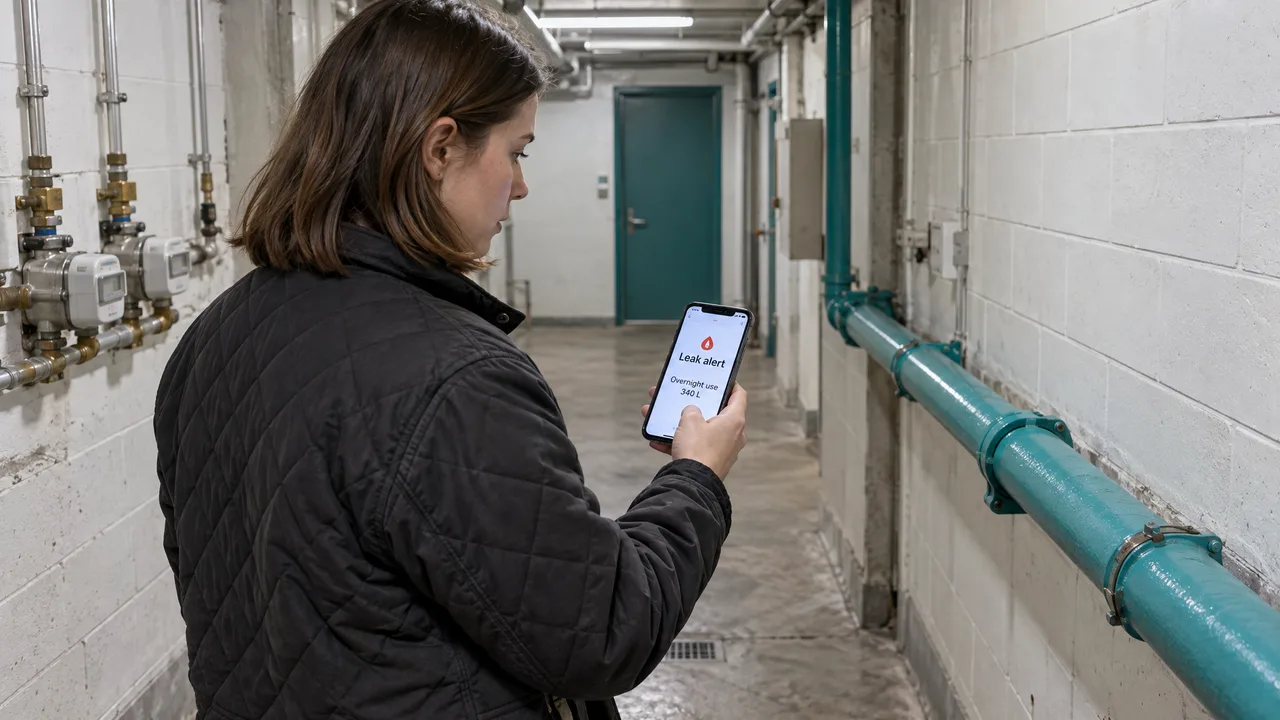
Choosing utility management software comes down to three distinct tool types: accounts-payable bill processors, clamp-on meter hardware, and daily utility-data monitoring platforms. Pick your platform by how reliably it turns daily usage data into an actionable alert, not by how many dashboards it shows. A chart you forget to log into will never stop a running toilet before the billing cycle closes.
Table of Contents
- Match Your Utility Problem to the Right Tool Category
- Criteria That Separate Daily Monitoring From Monthly Reporting
- Running a Side-by-Side Pilot Before You Commit
- Questions to Ask Vendors Before Signing
- Where Youtilitics Fits Your Portfolio
- Frequently Asked Questions
Match Your Utility Problem to the Right Tool Category
Start with one question: do you lose more money to clerical billing errors or to physical consumption spikes between bills? Your answer splits the market in half and eliminates most directory listings on Capterra or Softwareadvice right away.
If an accounting team spends forty hours a month keying PDF invoices into general ledger codes, utility bill auditing software solves an administrative bottleneck. Those platforms catch late fees, tariff misclassifications, and duplicate statements across hundreds of accounts. What they cannot do is warn you on Tuesday that a vacant rental unit's furnace has been running nonstop since Sunday, because the software only sees what happens after the utility prints the monthly statement.
Homeowners, landlords, and lean operations teams face the opposite problem. Paying the bill takes two minutes on autopay; the real financial hit comes from hidden consumption. The average family can waste 180 gallons per week, or 9,400 gallons of water annually, from household leaks, according to EPA WaterSense statistics (2017). Waiting thirty days for a statement turns a minor flapper replacement into a four-figure variance dispute with a tenant or property owner.
Hardware monitors offer real-time flow readings, yet installing physical sensors across multiple units requires electrician or plumber visits, Wi-Fi handoffs at turnover, and physical access to pipes or breaker panels. For single-family homes and scattered-site rentals where utilities already record interval meter data, software that reads directly from utility accounts catches issues the same day without putting hardware on the wall.
Criteria That Separate Daily Monitoring From Monthly Reporting
Evaluating energy and water management systems gets easier when you ignore colour-coded summary charts and audit how the data enters and leaves the system. Whether you manage one home or coordinate maintenance for property managers, check five concrete mechanics against every vendor on your shortlist:
| Evaluation Criterion | Concrete Evidence to Check During a Demo |
|---|---|
| Data ingestion method | Look for OAuth2 standards like Green Button where your password stays with the utility, or local device sync, rather than handing plain-text portal credentials to a third-party server. |
| Sync frequency | Verify whether consumption updates daily in the background or waits for monthly PDF statement scraping, and confirm a manual CSV fallback exists for smaller municipal utilities. |
| Baseline logic | Check that anomaly thresholds adapt to each individual property's historical pattern rather than relying on one static gallon or kilowatt-hour cap across distinct buildings. |
| Alert noise control | Ask to see actual email notifications: strong tools stay quiet during normal weeks and message you only for sustained continuous flow, spikes, vacancy usage, or post-fix drops. |
| Turnover documentation | Inspect the export format to confirm you can pull clean date-bounded usage records for move-in and move-out verification or owner reporting without rebuilding charts manually. |
Running a Side-by-Side Pilot Before You Commit
- Pull your utility account list and pick your two hardest test cases: one primary residence or high-bill rental with smart-meter interval data, and one property served by a local municipal water provider.
- Check your current manual workflow first so you know when to outgrow a spreadsheet and have a clear record of how long monthly entry currently takes you.
- Connect your top two shortlisted platforms to the exact same utility accounts during a short trial window, refusing any setup that requires mailing bills or waiting weeks for custom onboarding.
- Trigger or observe a known usage event (such as an EV charging session, a thermostat setback, or an irrigation run) and check whether each tool separates that load on the next daily sync.
- Export one owner or household report at the end of day three and cut whichever platform forced you to log in manually just to figure out if everything was normal.
Questions to Ask Vendors Before Signing
How do you handle utility credentials and broken connections?
A trustworthy vendor separates authorization from password storage. Look for direct OAuth2 handshakes where the utility issues a revocable token, or a companion sync architecture where credentials never leave your own phone. Walk away if a sales rep asks you to paste utility usernames and passwords into a shared onboarding spreadsheet, or claims 100% automated coverage across every rural water district without mentioning CSV fallbacks.
How does the software decide what counts as an abnormal spike?
Static thresholds fail fast in real buildings. A four-bedroom home with an electric vehicle and heat pump has a completely different overnight floor than a one-bedroom condo. Convincing platforms learn each address's normal rhythm before firing alerts, and distinguish continuous multi-hour water flow from a heavy laundry day. Weak tools force you to invent arbitrary numeric triggers for every meter on day one, guaranteeing alert fatigue by week two.
What happens when a rental unit sits vacant between tenants?
Vacant properties need tighter tolerances than occupied ones. Ask whether the system tracks vacancy activity, freeze risk when heating drops unexpectedly, and included-utility overages on short-term or all-bills-paid leases. If the vendor treats every address as a continuously occupied office building, your team will still end up checking portals by hand during winter turnovers.
How is pricing structured when one address has electricity, gas, and water?
Per-meter billing punishes thorough monitoring. Confirm whether commercial or multi-property plans bill per door (where electricity, gas, and water at the same street address count as one property) or charge separate fees for every individual meter feed. Clear pricing pages beat custom enterprise quotes every time for small and mid-sized portfolios.
Can this tool confirm that a repair or upgrade worked?
Spotting spikes is half the job; verifying the fix closes the loop. The average family spends more than $1,000 per year in water costs, yet can save more than $380 annually by retrofitting with WaterSense labeled fixtures and ENERGY STAR certified appliances, per EPA WaterSense data (2017).[1] Strong software flags sustained usage drops after you replace a running flapper or adjust an HVAC schedule so you have proof the work paid off.
Where Youtilitics Fits Your Portfolio
We built Youtilitics for homeowners, landlords, and lean property teams who want same-day anomaly detection on their utility accounts without installing hubs, clamps, or panel hardware on Resident and Pro utility-data plans. Green Button connections run automatically via OAuth2 so no password is shared, while our Sync Companion app runs a nightly sync and keeps utility credentials on your phone, with manual CSV upload available as a fallback.
For homes and rentals, our AI learns each property's normal usage patterns, flags water leaks when continuous flow runs 8+ hours, and sends email alerts for vacancy activity, freeze risk, and included-utility overages only when something needs attention. Property managers also get owner-ready exports and usage records around move-in and move-out. If your operations require physical sub-metering or cold-chain monitoring where utility interval feeds do not exist, check how we match your property type and business workflow, noting that our separate IoT leak detection offer uses a gateway and sensors.
Utility coverage is not universal, especially for water, so property businesses must validate utility compatibility before scaling a pilot, and business plans are currently in early access with limited onboarding cohorts. To see how daily utility syncs catch leaks before bill day without hardware installs, watch the Youtilitics demo, or review our 3-day free trial (no credit card required, cancel anytime) on the Youtilitics pricing plans page.
Frequently Asked Questions
What are the four types of utility software?
Search engines blend two unrelated definitions under this term. In general computing, the four classic system utilities are antivirus tools, file managers, disk management tools, and backup software. In energy and property operations, the market splits into four functional categories: utility bill accounting platforms, automated interval-data monitoring SaaS, smart-meter or sub-meter hardware apps, and enterprise sustainability reporting suites.
What are some examples of utility software?
For residential and rental utility tracking, Youtilitics connects directly to electricity, gas, and water utility accounts to flag leaks, EV charging patterns, and HVAC spikes without unit hardware on its utility-data plans. Broader software directories like Capterra and Softwareadvice also catalogue enterprise bill-auditing systems, municipal billing platforms, and hardware-paired water or electricity apps depending on whether you manage invoices or physical buildings.
Which software is used in BMS?
A Building Management System (BMS) in a commercial high-rise uses local supervisory control protocols and vendor-specific facility software to command chillers, boilers, dampers, and lighting relays in real time. Because full BMS installations require wired controllers and dedicated engineering staff, single-family rentals and smaller multifamily properties rarely have them, relying instead on utility-account monitoring software to spot HVAC runtime anomalies and consumption drift.
What is a utility management system?
A utility management system centralizes electricity, gas, and water data so building owners or operators can track consumption, catch anomalies, and verify costs. Earlier engineering frameworks, such as a 2002 IEEE Power Engineering Society paper on integrative utility management system architecture, focused on linking disparate operational databases inside utility providers. Broader public-sector reviews, including a 2022 Zenodo paper on technical and software tools in public utilities, examine how municipal operators administer infrastructure and billing. For property owners today, the term refers to cloud software that turns meter data into timely maintenance alerts.
Start saving on your bill.
Get alerts when your energy usage looks abnormal — free trial, no card required.